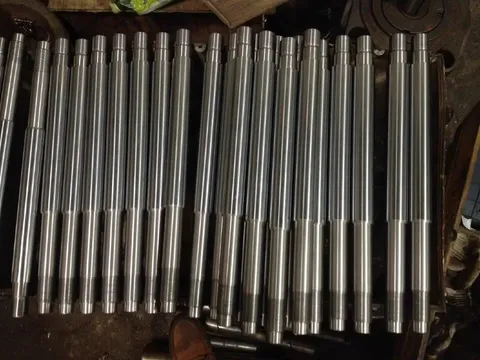
The ejector cylinder is the small double-acting hydraulic cylinder mounted on the back of the moving platen of a hydraulic injection molding machine. It drives the ejector: its rod pushes the connecting plate and the ejector rods forward to eject the part, then pulls them back. All-electric machines usually do the same job with a servo motor and a ball screw instead of a cylinder.
How the ejector cylinder works
- A directional valve sends oil to the rear of the piston. The rod moves forward, pushing the connecting plate and the ejector rods, and the rods move the mold's ejector plate.
- At the set forward position the valve switches, and oil sent to the rod side pulls the piston back.
- The ejector speed and force in each direction are set on the controller, which controls them through the machine's valves: see directional valves and proportional valves.
- The position is measured by a linear transducer on many current machines, or by proximity sensors or limit switches at set points on simpler ones. The controller uses it for the stroke settings and to confirm that the ejector is back before the mold closes.
Variants
- A single cylinder on the center line of the moving platen.
- Two or more cylinders spaced evenly across the platen, so that a large connecting plate is pushed evenly.
Which layout a machine uses depends on its make and size: check the machine manual or parts list.
Small cylinders of the same type are also used as clamping boosters or for other auxiliary movements. The auxiliary cylinder we supply is listed for clamping booster or auxiliary ejection use, and the auxiliary cylinder page covers its other uses.
Signs of a worn or faulty ejector cylinder
- Oil on the back of the platen, the connecting plate or the mold: a leaking rod seal or a loose fitting.
- Ejector slow or weak at the usual settings: internal leakage past worn piston seals, or a valve or pressure problem.
- Ejector creeps forward when it should stay back: leakage in the cylinder or in the valve that holds it.
- Jerky movement: air in the cylinder, a sticking valve, or a connecting plate binding on its guide pins.
- Position errors or ejector-not-back alarms: a faulty transducer or switch, a loose sensor mounting, or a cylinder that does not complete its return.
- A scored or pitted rod, which destroys new rod seals quickly.
Causes of wear
- Contaminated or degraded oil, which wears the seals and scores the bore: see hydraulic oil.
- Side loads from a tilting connecting plate or from ejector rods of different lengths.
- A loose rod connection or loose mounting bolts, which let the cylinder knock at each end of the stroke.
- Heat from the mold and platen, which ages the seals.
- Dirt on the rod, which gets past a damaged wiper.
Inspecting and repairing the ejector cylinder
- Watch the ejector run at slow speed. Look for leaks, jerks and creep, and compare the stroke time with earlier records.
- Switch off, lock out and release the hydraulic pressure before opening any fitting.
- Check the mounting bolts and the rod connection to the connecting plate.
- Check the rod surface for scoring, pitting and worn chrome.
- To reseal, remove the cylinder, take out the piston and rod, and replace the piston seals, rod seals and wiper as a set. The cylinder seal replacement page describes the general procedure, and the rod seals page the seal types.
- Refit the cylinder, bleed the air, and check the stroke and position readings before running with a mold.
If the bore or the rod is badly scored, a new cylinder is often the better repair.
What to send for a replacement quote
- The machine brand, model and serial number.
- The cylinder's bore, rod diameter and stroke, from the nameplate or measured.
- The mounting type and bolt pattern, the rod end thread, and the port sizes and positions.
- Photos of the cylinder from several sides, and the OEM part number if you have it.
Request a quote, and see the ejector guide for how the cylinder works with the rest of the ejector.
Updated by the IMSPARES technical team.