The shot size of an injection molding machine is the volume, or weight, of melt that the screw can push into the mold in one stroke. Shot size calculation starts from the screw diameter and the injection stroke: shot volume = π × D² ÷ 4 × stroke. To get the shot weight for your material, multiply that volume by the material's melt density. Machine catalogs usually state shot weight for polystyrene, so convert it before comparing it with your part.
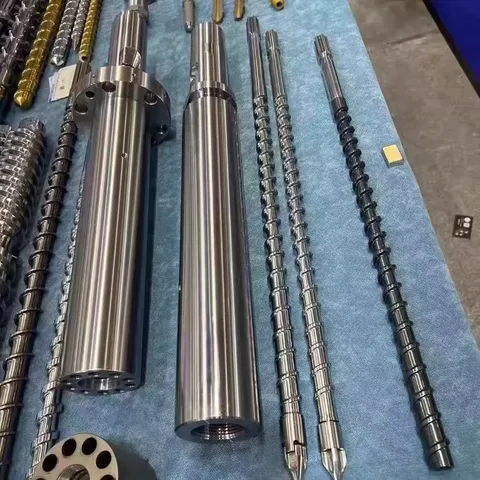
Shot size is a property of the barrel and screw, items 3 and 4 in the drawing. For how the screw builds the shot during recovery, see the barrel and screw guide.
Barrel capacity calculation
The barrel capacity, or theoretical shot volume, is the volume the screw sweeps over its full injection stroke:
Shot volume (cm³) = π × D² ÷ 4 × stroke, with the screw diameter D and the stroke in centimeters.
For example, a screw of 40 mm (4.0 cm) diameter with a maximum stroke of 150 mm (15 cm):
- Screw cross-section area: π × 4.0² ÷ 4 = 12.57 cm²
- Theoretical shot volume: 12.57 × 15 = 188.5 cm³
The screw diameter and the maximum stroke are in the machine's specification sheet, usually together with the theoretical shot volume.
From shot volume to shot weight
Shot weight (g) = shot volume (cm³) × melt density (g/cm³)
Use the melt density, not the density of the solid plastic: the melt is less dense than the molded part, which shrinks as it cools. Material data sheets often list it. In the example, a material with a melt density of 0.9 g/cm³ gives 188.5 × 0.9 ≈ 170 g.
Machine catalogs usually give shot weight for polystyrene (PS). To convert:
Shot weight for your material ≈ PS shot weight × (density of your material ÷ density of PS)
using the same kind of density, melt or solid, for both.
In practice the screw delivers a little less than the theoretical volume, because the melt compresses under pressure and a little flows back past the check ring before it closes. A worn check ring or a worn screw and barrel make the difference larger.
How much shot a mold needs
- Weigh the parts from all cavities together with the runner and sprue (for a cold runner mold), or calculate it from the part volumes.
- Convert the weight to melt volume: weight ÷ melt density.
- Divide by the screw cross-section area to get the stroke the shot needs.
- Add the cushion: the melt left in front of the screw at the end of hold, so the screw does not bottom out.
For example, 120 g of parts and runner in a material with a melt density of 0.9 g/cm³ needs 120 ÷ 0.9 = 133 cm³ of melt. On the 40 mm screw above, that is 133 ÷ 12.57 = 10.6 cm, or about 106 mm of stroke, plus the cushion.
Decompression (suck-back) after recovery moves the screw further back without adding melt, so it does not count toward the shot.
Shot size as a share of barrel capacity
Capacity used = shot volume needed ÷ theoretical shot volume. In the example, 133 ÷ 188.5 ≈ 71%.
- Too small a share. The plastic stays in the barrel for many cycles before it is injected. The residence time grows, and heat-sensitive materials degrade, giving black specks and discoloration. Very short strokes are also harder to control precisely.
- Too large a share. There is little stroke left for the cushion and for process changes. The screw also recovers over a long stroke, which shortens the length of flights doing the melting; see L/D ratio for why that affects melt quality.
A common rule of thumb is to use roughly 20% to 80% of the barrel's shot capacity. Material suppliers give a maximum residence time for heat-sensitive grades, which can narrow that range.
Choosing a screw diameter for the shot
Many injection units can be fitted with more than one screw diameter. The force of the injection cylinder stays the same, so:
- A larger screw gives more shot volume but a lower maximum injection pressure.
- A smaller screw gives less shot volume but a higher maximum injection pressure.
Shot volume grows with the square of the diameter, and the maximum injection pressure falls by the same factor. For example, going from a 40 mm to a 45 mm screw gives (45 ÷ 40)² ≈ 1.27 times the shot volume and about 0.79 times the maximum injection pressure. Choose the screw that covers the shot with the pressure the part needs.
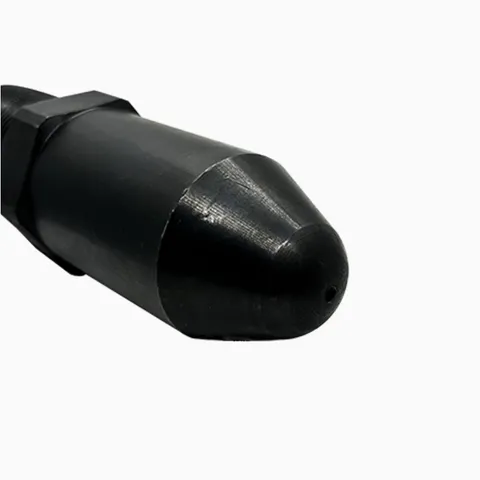
A change of screw diameter means a new screw, barrel and tip set, and the machine maker should confirm that the injection unit accepts it. Our article on short shots covers what to check when the machine does not fill the part.
What to send for a quote
If your shots do not fit the barrel you have, send:
- The machine brand and model, and the current screw diameter.
- The shot weight you need, including the runner, and the material.
- The injection pressure the part needs, if you know it.
- The screw and barrel details listed in the screw guide.
We supply bimetallic barrel and screw assemblies. Request a quote with the details above.
Updated by the IMSPARES technical team.