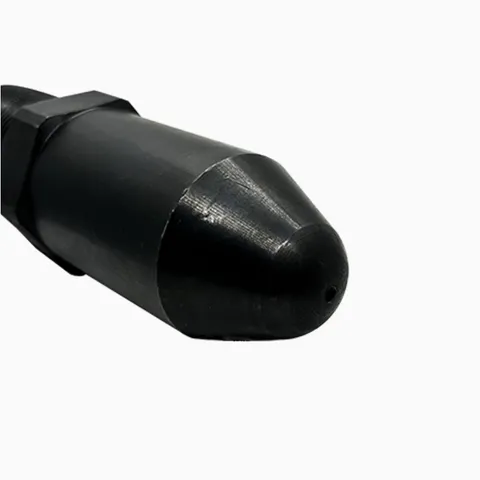
A bimetallic barrel is an injection molding machine barrel whose bore is lined with a layer of wear-resistant alloy that is cast and bonded to a steel outer tube. The steel carries the injection pressure and the alloy liner takes the wear, so the barrel lasts much longer than a nitrided barrel with glass-filled, mineral-filled, flame-retardant or corrosive plastics. A bimetallic barrel and screw assembly pairs it with a matching screw whose flights are hard-faced.
The barrel is item 3 in the drawing. For its construction, zones and measurement, see the barrel guide; this page covers what changes when the barrel is bimetallic.
How a bimetallic barrel is made
The liner is usually made by centrifugal casting:
- A measured charge of the liner alloy is loaded into the bore of a machined steel tube, and the ends are sealed.
- The tube is heated in a furnace until the alloy melts.
- The tube is spun at high speed, which spreads the molten alloy into an even layer around the bore, where it bonds to the steel as it cools.
- The bore is then machined and honed to its finished size and surface.
The bimetallic barrel and screw assemblies we supply have a centrifugally cast alloy liner in a 38CrMoAlA steel barrel, with a listed liner hardness of HRC 58–65.
Liner alloys
Liner alloys fall into a few families, chosen for the material the barrel will run:
- Iron-based alloys are hard and resist abrasion; they suit most filled materials.
- Nickel- or cobalt-based alloys resist corrosion better, for plastics and additives that release corrosive gases, such as some flame retardants.
- Alloys with tungsten carbide particles in a nickel-based matrix resist the heaviest abrasion, such as high glass-fiber contents, and abrasion combined with corrosion.
Ask the barrel maker which alloy suits your materials; one choice rarely covers every case.
Bimetallic or nitrided barrel
| Nitrided barrel | Bimetallic barrel | |
|---|---|---|
| Wear surface | A thin hardened layer of the barrel steel itself | A cast liner of wear-resistant alloy, much thicker than a nitrided layer |
| Once the hard layer is worn | Wear speeds up in the softer steel below | The liner keeps its properties through its thickness |
| Corrosion resistance | Limited | Good with a nickel- or cobalt-based liner |
| Suited to | Most unfilled plastics | Glass-filled, mineral-filled, flame-retardant and corrosive plastics |
| Cost | Lower | Higher, offset by longer life with abrasive materials |
For unfilled commodity plastics a nitrided barrel is often enough. If you switch a machine to filled or corrosive grades, or if barrels on that machine wear out quickly, a bimetallic barrel is the usual upgrade.
Bimetallic screws
A bimetallic screw has a layer of hard alloy welded or sprayed onto its flight lands, the surfaces that run against the barrel. The rest of the screw is the base steel. Other options for abrasive and corrosive materials are hard coatings over the whole screw and screws made of tool steel.
Choose the screw and the barrel together, so the flight surface and the liner suit each other and the material you run. When both are worn, replacing them as a matched assembly gives the correct clearance from the start. The injection screws we supply come in standard nitrided and bimetallic versions, and the screw guide explains the screw's zones and types.
When a bimetallic barrel is worth it
- Glass-fiber or mineral-filled plastics.
- Flame-retardant grades and other materials that release corrosive gases when they overheat.
- High loadings of abrasive pigments, such as titanium dioxide.
- Machines that run one demanding material for long periods.
- Barrels that have needed replacing often on the same job.
Wear and inspection
A bimetallic liner wears gradually, like a nitrided bore, and is measured the same way: see measuring barrel and screw wear and when to replace the barrel. Also look for cracks, chips or flaking in the liner, especially near the ends.
The liner is hard but less ductile than steel, so treat the bore with care: clean it with brass tools, never strike it with steel bars, and never turn or inject on plastic that is not fully melted. Once the liner is worn through in places, the barrel wears quickly and should be replaced.
What to send for a quote
- The machine brand and model, and the screw diameter.
- The materials you run, with the filler type and content, and any corrosive additives.
- The barrel dimensions listed on the barrel page linked above, or the OEM part number.
- Whether you need the barrel alone or the barrel with a screw, screw tip, check ring and end cap.
- Photos of the old barrel and screw.
Our bimetallic assemblies are listed for screw diameters from Φ36 mm to Φ70 mm. Request a quote with the details above.
Updated by the IMSPARES technical team.