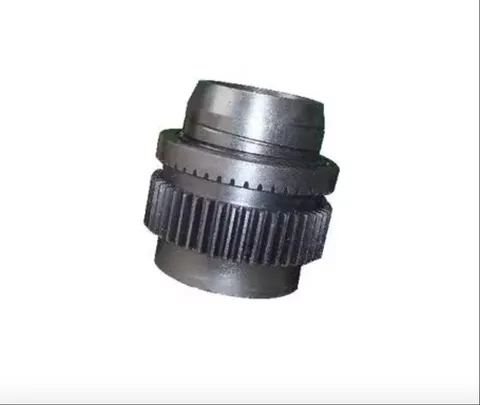
Guide columns are hardened, ground steel shafts fixed between two plates; a moving plate slides along them on guide bushings, bronze or self-lubricating sleeves that keep the plate square as it travels. In the injection unit of many hydraulic machines, the moving plate carries the screw drive and is pushed by the injection cylinder and its piston rod, so the guide columns keep the screw drive in line with the barrel on every shot. The columns are locked into the fixed plates by guide column nuts, and the bushings, not the columns, are designed to take the wear.
Where the guide columns sit
The drawing shows the arrangement: two guide columns fixed between two plates, the moving plate sliding on them through its bushings, and the injection cylinder (4) on the fixed plate driving the moving plate through the injection piston rod (5) and its lock nut (6). The same kind of column and bushing guides moving plates in other parts of the machine, such as the clamping and ejector units, and the part pages of our guide column parts list those uses, so compare the dimensions with your old parts before ordering. The injection unit guide explains how the moving plate fits into the cycle.
How they work
The columns guide the moving plate and carry its weight and the weight of the screw drive on it. Each bushing is a sleeve fitted in a bore of the moving plate, with a small running clearance on the column. The column is hard and ground smooth; the bushing is softer, so it wears first and the expensive column is protected.
- Bronze bushings run on a film of grease or oil, from the centralized lubrication system or a grease point. See toggle lubrication for how centralized systems work.
- Self-lubricating bushings carry a solid lubricant in the material and need little or no external lubrication.
The parts
The numbers are those of the drawing.
Guide column (1)
A hardened and ground steel shaft with threaded or stepped ends for the nuts. See the guide shaft we supply, made of 42CrMo or GCr15 steel, ground and hardened.
Guide column nuts (2)
They lock the columns into the fixed plates. Plain nuts and castellated or flanged nuts suit different plate designs: see the Type 2 guide column nut and the Type 3 castellated or flanged nut.
Guide column bushings (3)
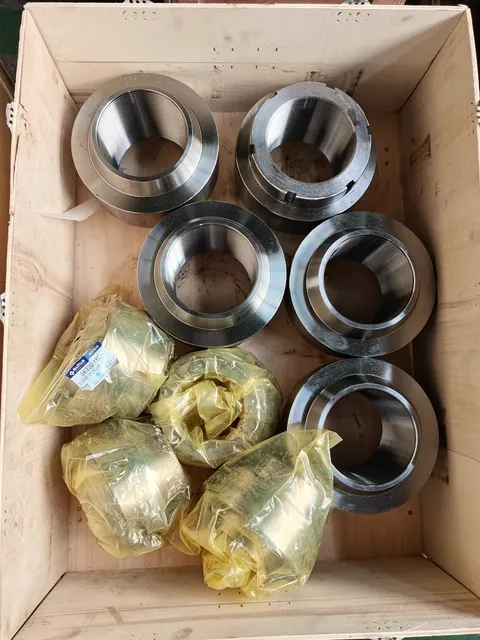
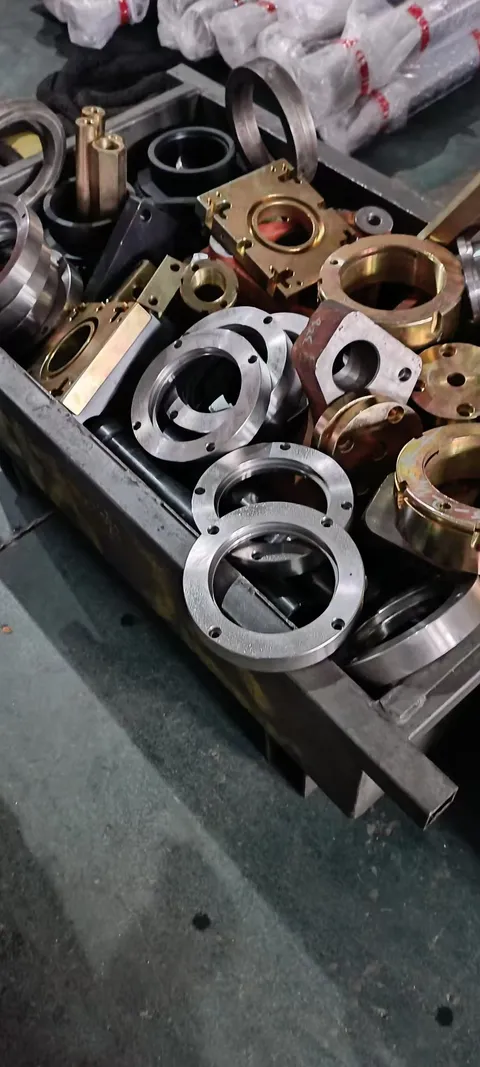
Bronze (ZCuSn10P1) or self-lubricating sleeves in the moving plate, in different sizes for different machines: see our small, medium and large guide column bushings.
Lock nut (6)
A jam nut that stops a nut or a threaded rod working loose under repeated loads, used on guide columns, shafts and piston rods. In the drawing it holds the injection piston rod (5) in the moving plate. See the locking jam nut.
Signs of wear
- The moving plate has play: it drops or rocks when you lift or push it.
- Movement is jerky, squeaks or judders, especially at low speed.
- The columns show bright worn bands, scoring or rust; there is bronze dust around the bushings.
- The screw drive is visibly out of line with the barrel.
- The injection cylinder's rod seals wear early or leak, a sign of side load on the piston rod.
- Knocking at the start or end of the stroke, or nuts that have turned.
Causes
- Lack of lubrication: a dry bronze bushing wears fast and can score the column.
- Dirt: plastic dust, pellets and debris carried into the bushing.
- Misalignment of the plates, or loose column nuts that let a column move.
- Age: every stroke wears the bushing a little.
Inspection and measurement
- Release hydraulic pressure and lock off the machine. Clean the columns.
- Look along each column for scoring, worn bands and rust.
- Set a dial indicator on the fixed part with its tip on the moving plate near a bushing. Lift the plate gently with a bar or jack and read the play. Repeat at each bushing.
- Compare the play with the limit in the machine manual. For a precise check, measure the bushing bore with a bore gauge and the column diameter with a micrometer.
- Check that the column nuts and lock nuts are tight.
Replacing bushings and columns
- Support the moving plate and the screw drive so they cannot drop.
- Press out the old bushings with a suitable puller or press; do not hammer them out against the plate.
- Clean the bores, then press in the new bushings square. A press fit can close the bushing bore slightly, so check it after fitting against the machine maker's dimensions.
- Replace a column that is scored, worn below its size or bent. Tighten the column nuts to the torque in the machine manual and fit the lock nuts.
- Lubricate, then move the plate through its full stroke by hand or at low speed and check it runs freely and in line.
Replace all the bushings of a plate together.
What to send for a replacement quote
- The machine brand and model.
- For columns: the diameter, overall length, and the end threads or steps.
- For bushings: the inside and outside diameters, length, any flange, and the material (bronze or self-lubricating).
- For nuts: the thread size and pitch, outside size, and the type (plain, castellated, flanged or jam nut).
- Photos of the old parts and the OEM part number if you have one.
Browse the bushings and guides category, then request a quote.
Updated by the IMSPARES technical team.