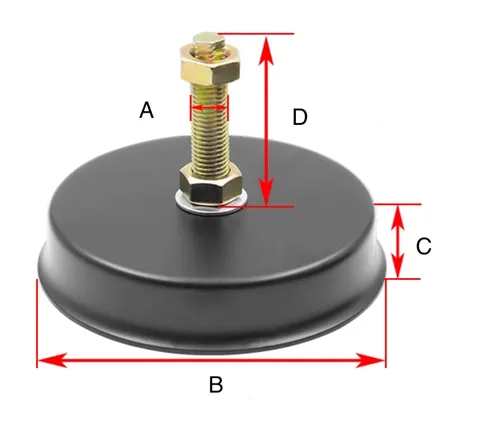
Anti-vibration pads for injection molding machines are the rubber pads, combined with a steel plate, that sit under each leveling bolt of the machine. They spread the machine's weight onto the floor, damp the vibration and shocks of mold opening and closing, injection and the hydraulic pump, reduce the noise passed into the building, and grip the floor so that the machine does not creep. Where the manufacturer allows it, they let the machine stand on a suitable floor without anchor bolts. In the drawing they are the pads under the leveling foot bolts.
How anti-vibration pads work
Under the machine's weight the rubber is slightly compressed. Every shock and vibration from the machine flexes it a little more, and the rubber turns part of that energy into heat instead of passing it on, so less force reaches the floor. The steel plate spreads the load over the rubber and gives the leveling bolt a seat, and the rubber underside grips the floor.
The stiffness of the pad has to suit the load on it. A pad that is too hard for its load passes more vibration into the floor. A pad that is too soft lets the machine rock or sink, and the level drifts as the rubber settles. That is why pads come in different sizes and hardnesses, each with a load rating.
Types of anti-vibration pad
The anti-vibration foot pads we supply, made of rubber with a steel plate, come in two types:
- Round base: the standard round pad, with the bolt seated in its center.
- Flower base: a leveling type with a flower-shaped base.
Their rubber hardness is in the range of 40–65 Shore A. In general, lower Shore A values mean softer rubber, which isolates vibration better but carries less load, and higher values mean stiffer, more stable pads. The right choice depends on the load at each foot, not on hardness alone.
Other designs, such as multi-layer pads with several steel plates, exist for heavier loads and different floors.
Choosing anti-vibration pads
- Load per foot. The load is rarely shared equally between the feet. Take it from the manufacturer's foundation drawing if you can, and choose a pad whose load rating covers it.
- Bolt seat. The pad must fit the leveling bolt: its thread or seat size and the shape of the bolt end.
- Height. Keep the same height as the old pads, so that the machine's working height and the adjustment range of the bolts stay the same.
- Oil. If hydraulic oil can reach the pads, ask for an oil-resistant rubber compound, because many rubbers soften and swell in contact with mineral oil.
- Floor. Pads need a flat, clean, sound concrete floor to grip and to carry the load evenly.
Signs of worn anti-vibration pads
- Cracks or crumbling at the edges, or rubber that has gone hard from age and heat.
- Swollen, soft or sticky rubber where oil has reached it.
- A pad that is permanently flattened and bulges at the sides, so the level drifts.
- Rubber coming away from the steel plate, or a corroded plate.
- The machine creeps on the floor, vibrates or makes more noise than before.
- One pad visibly more compressed than the others, a sign of uneven load.
Oil and water standing under the machine shorten pad life more than anything else, so fix leaks and keep the area clean.
Replacing anti-vibration pads
- Plan to replace the full set if the old pads have aged or flattened, so that all feet start with the same height and stiffness.
- Stop the machine and work on one foot at a time. Lift that foot with a hydraulic jack at the jacking point the manufacturer shows, just enough to free the pad, and put solid blocks under the frame. Never put hands or feet under the raised machine.
- Remove the old pad and clean the floor under it.
- Place the new pad centered under the bolt, with the bolt end properly in its seat, and lower the machine onto it.
- When all the pads are in, level the machine as described in the leveling procedure and tighten the lock nuts.
- Check the level again after a period of running, because new rubber settles.
What to send for a replacement quote
- The machine brand, model, serial number and weight, and the number of feet.
- The pad type (round or flower base), outside diameter and height.
- The leveling bolt's thread size or seat size and the shape of its end.
- Any markings on the old pad, and photos of it in place and removed.
See the machine feet guide for how the pads work with the leveling bolts and the floor.
Updated by the IMSPARES technical team.